
What is the
Code Seeder Project?
The “Code Seeder: Cultivating a New Generation of Teachers to Nurture Thai Children’s Dreams for the Future” project is the first initiative of the Wisdom for Society Foundation. It aims to train and develop coding knowledge and skills for teachers through an international standardized curriculum (from Finland) and teaching methods adapted to the Thai social context. This enables teachers to effectively and sustainably teach Computing Science in Grades 4 – 6 of primary school and Grades 7 – 9 of secondary school.
Initially, the project will focus on underserved schools under the Office of the Basic Education Commission (OBEC) in Bangkok, the surrounding provinces, and Ayutthaya. In the future, the program will expand to reach schools nationwide.
Project Background
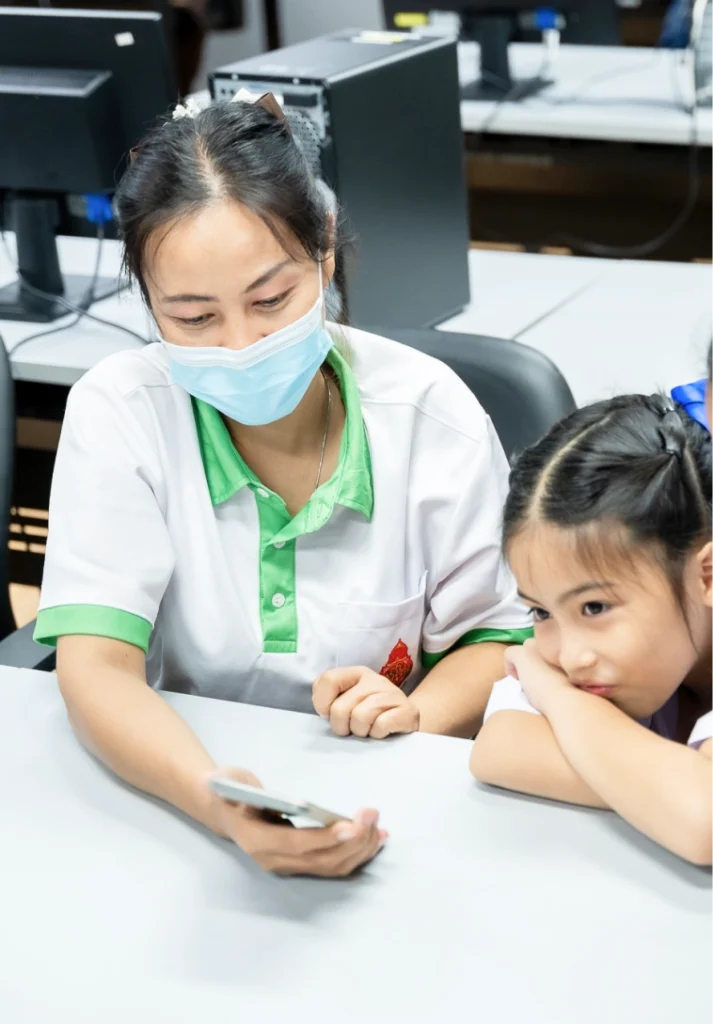
Professions that require programming skills, or coding, considered skills of the future, are in high demand worldwide. They offer good income opportunities, especially in the field of computer technology, where knowledge and skills in programming or coding are essential. However, in Thailand, the Office of the Secretary-General of the Education Council found in the year 2021 that many teachers still lack knowledge, skills, and processes for transmitting coding knowledge to students. This shortage includes teaching materials and a network among teachers to facilitate continuous exchange and enhancement of new knowledge. As a result, students lack the practical understanding to apply their learning. Therefore, the Wisdom for Society Foundation has initiated the “Code Seeder: Cultivating a New Generation of Teachers to Nurture Thai Children’s Dreams for the Future” project to train teachers with an internationally standardized coding curriculum and teaching methods suitable for Thai educators. This aims to enable coding teachers to effectively teach coding to children and youth groups with efficiency and sustainability
Project Objective

To develop knowledge and coding skills for teachers, enabling them to effectively and sustainably impart knowledge and skills to children and youth.
Partners

มหาวิทยาลัย
เทคโนโลยีพระจอมเกล้าพระนครเหนือ
FIBO: Institute of Field Robotics,
สถาบันวิทยาการหุ่นยนต์ภาคสนาม
มหาวิทยาลัยเทคโนโลยีพระจอมเกล้าธนบุรี
DIRI: Digital Interdisciplinary &
Robotics Institute,
สถาบันสหวิทยากรดิจิทัลและหุ่นยนต์
มหาวิทยาลัยราชมงคลพระนคร
We are looking for schools that meet the following criteria to participate
- Underprivileged Schools are managed by the Office of the Basic Education Commission (OBEC), which is an agency of the Ministry of Education that has the main duty of organizing and promoting basic education for the largest number of schools under its jurisdiction, which is suitable for the continuation of the project
- Schools where the school director participates and adheres to the project agreements
- Schools with a basic environment for teaching technology (such as access to the internet and computers for both teachers and students)
- Schools that have a desire to develop knowledge, skills, and processes for teaching coding knowledge and presentation
Qualifications of teachers

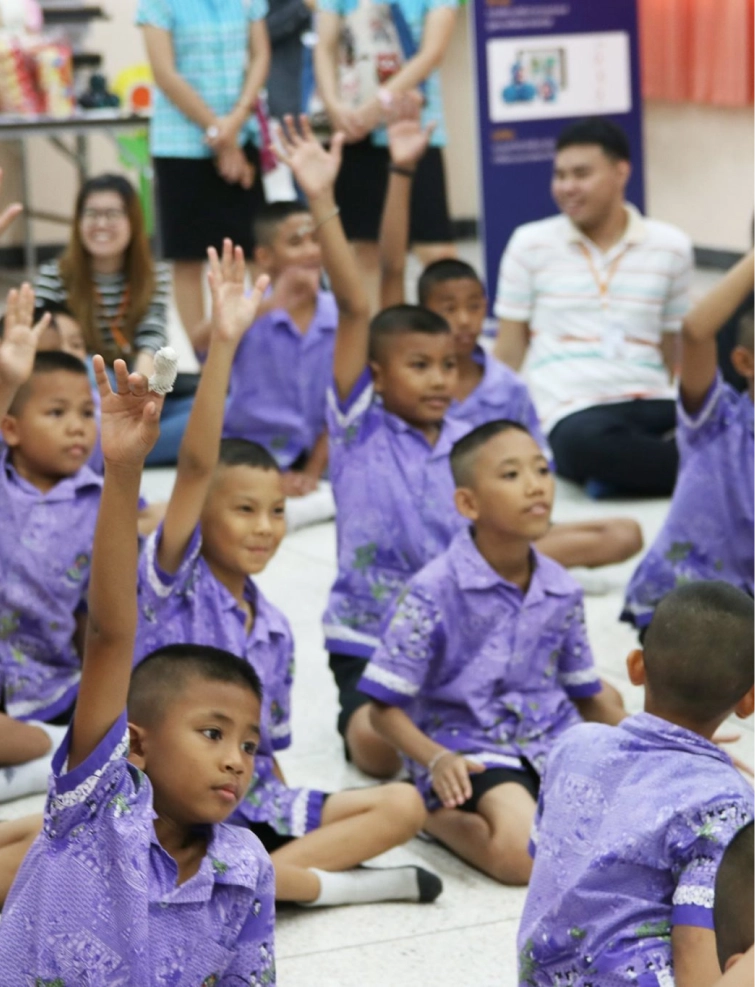
Assigned to teach computer science or similar subjects

High potential and readiness to learn new technology

Teach at the primary grade 4 – 6 or secondary grade 7 – 9 level
Equipped with basic English skills

Lack of experience, knowledge, skills, processes for knowledge transfer in coding
Activities Plan
The Code Seeder project has three main steps
01
Selection Process (1 month)
a.Contacting and selecting schools within the project’s target areas.
b.Selecting teachers who meet the qualifications.
02
Training Phase (15 days)
a.Online training for teachers of Grade 4 and Grade 7.
b.Trained teachers participate in game development competitions and present their work as examples.
03
Post-training Teaching (15 classes)
After training, the trained teachers proceed to teach the students.
Expected Result
1.
The trained teachers have increased their knowledge, skills, and processes in coding and presentation

2.
Networking opportunities for knowledge exchange among teachers will be established.

3.
Continuously expand their teaching outcomes

4.
Teachers’ performance will be assessed, with an average score of not less than 80%
